
Natural variation
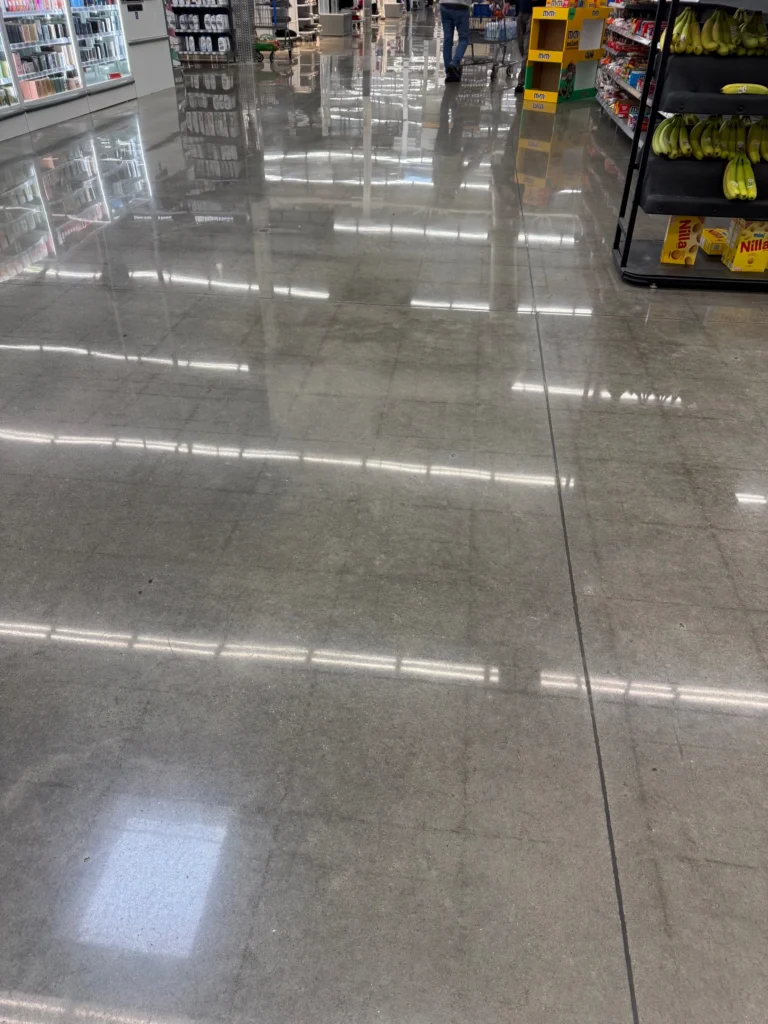
Aggregate, color, and repairs are part of the floor’s individual appearance.
POLISHED CONCRETE
Bring the existing slab into the design. Explore aggregate, sheen, and a finish that lets the concrete speak for itself.
START WITH YOUR SPACE
Every slab has its own composition and history. A good polishing plan starts by understanding both.
Aggregate, color, and repairs are part of the floor’s individual appearance.
Discuss the level of refinement and the look you want in the actual space.
Consider polishing for suitable larger interior slabs and commercial spaces.
Choose the finish with maintenance, spill response, and daily use in mind.
THE FOUNDATION OF A GOOD RESULT
A photograph can give you a direction. Your own concrete determines the result. A representative sample helps set expectations for aggregate exposure, sheen, and visible repairs.
Decide how much of the concrete’s underlying character you want to reveal.
View the sample in the room’s lighting, including patches and color variation.
Include joints, corners, previous coatings, and transitions in the scope.
OUR POLISHED CONCRETE WORK
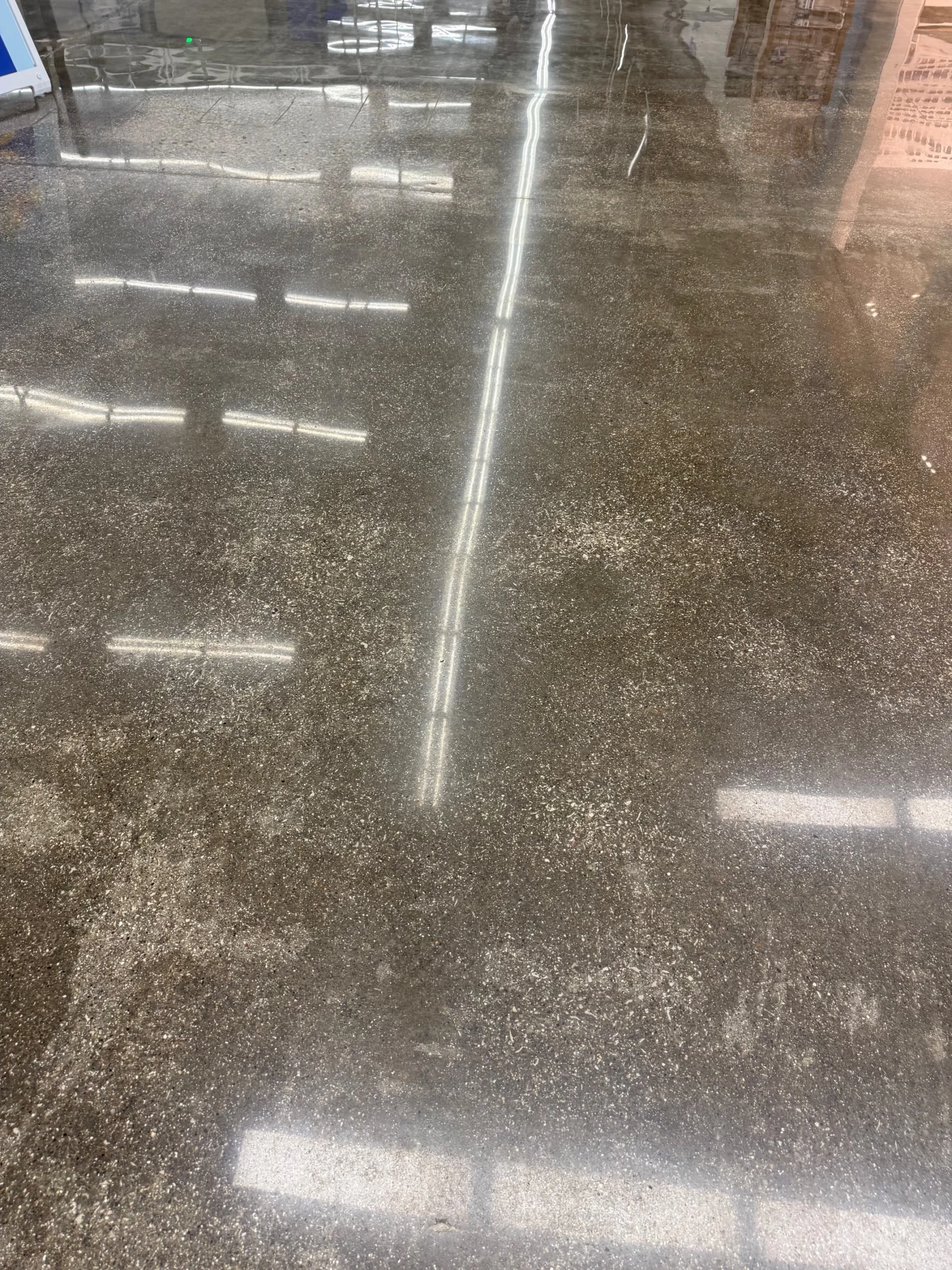
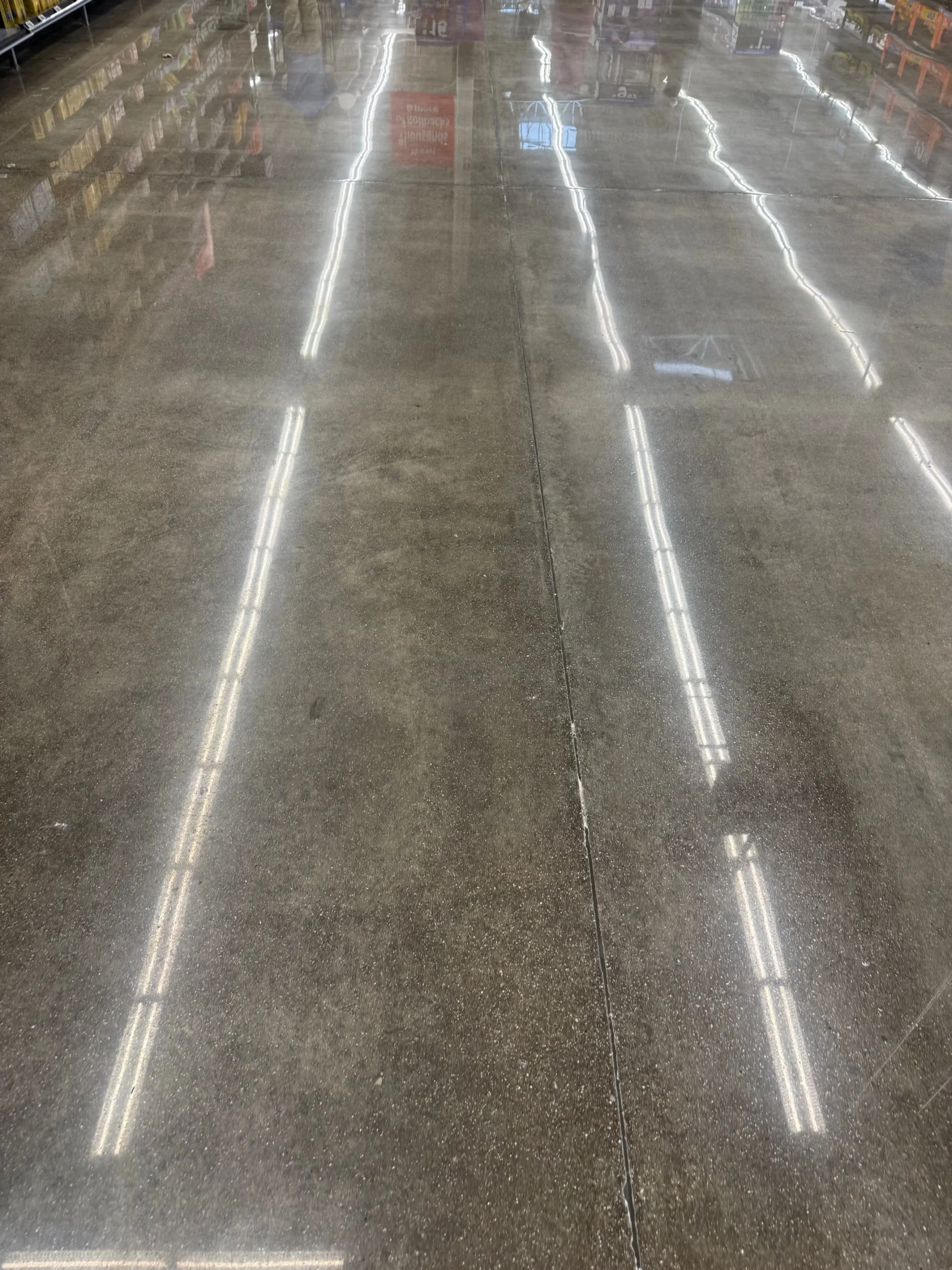
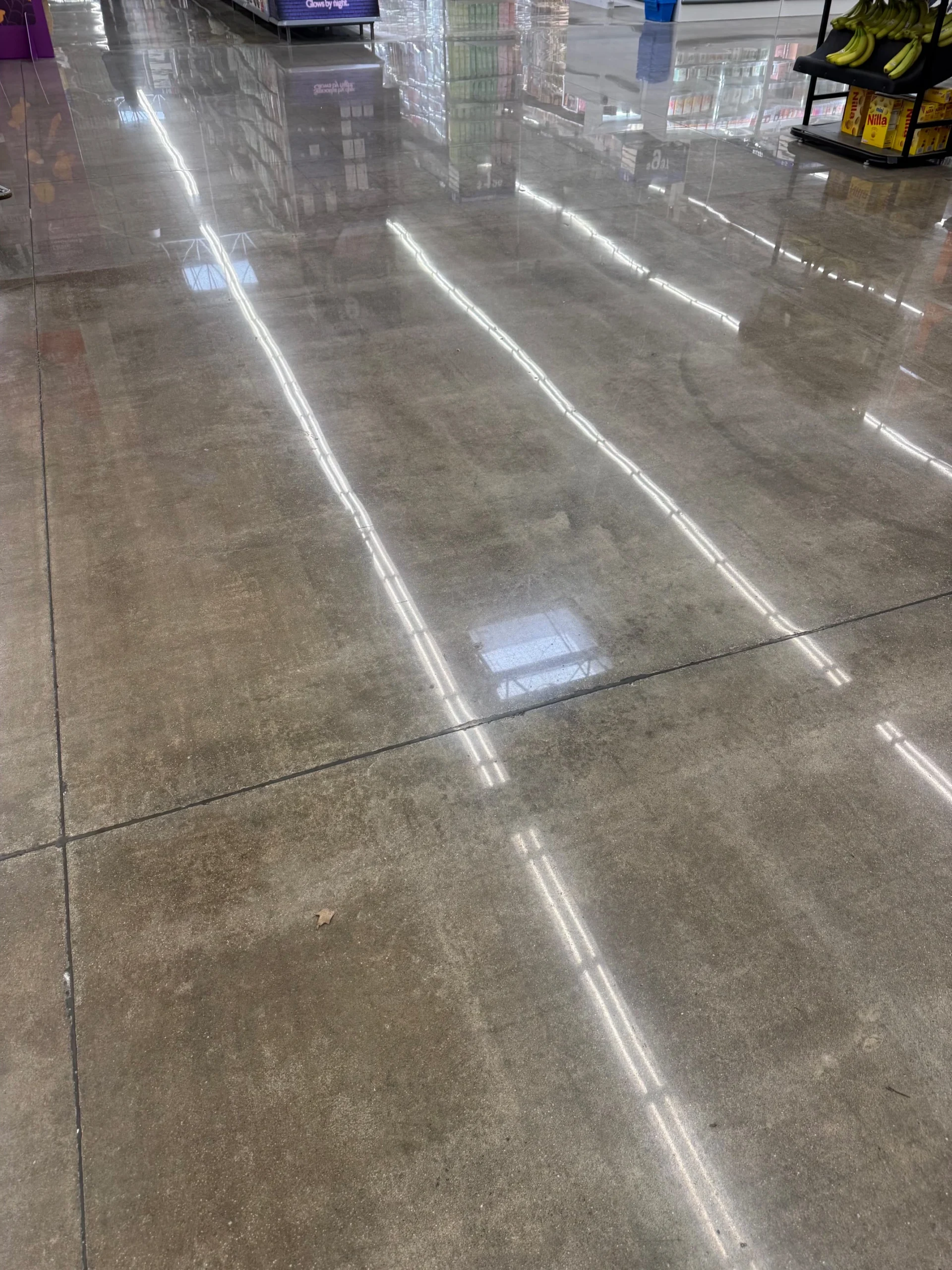
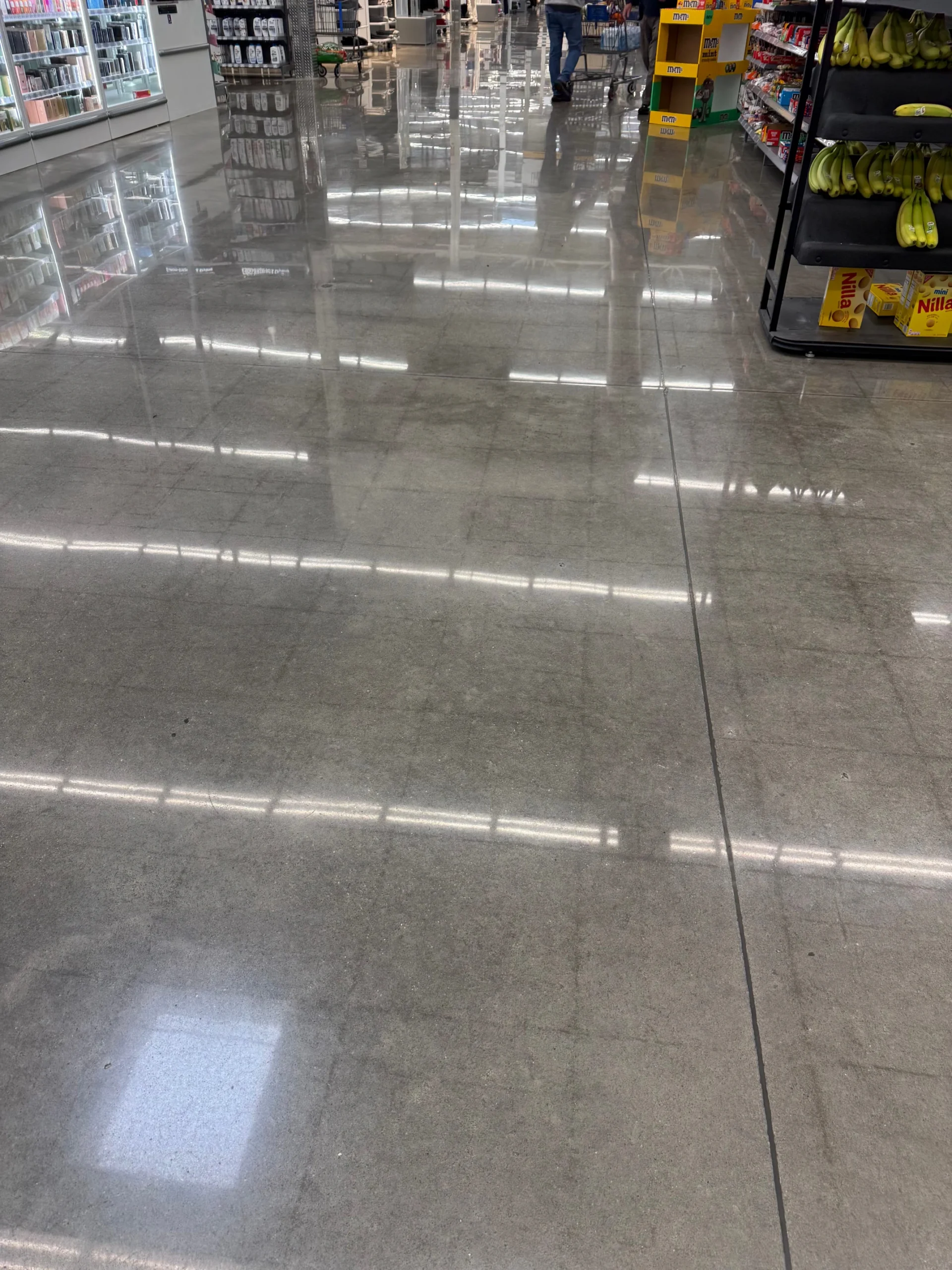
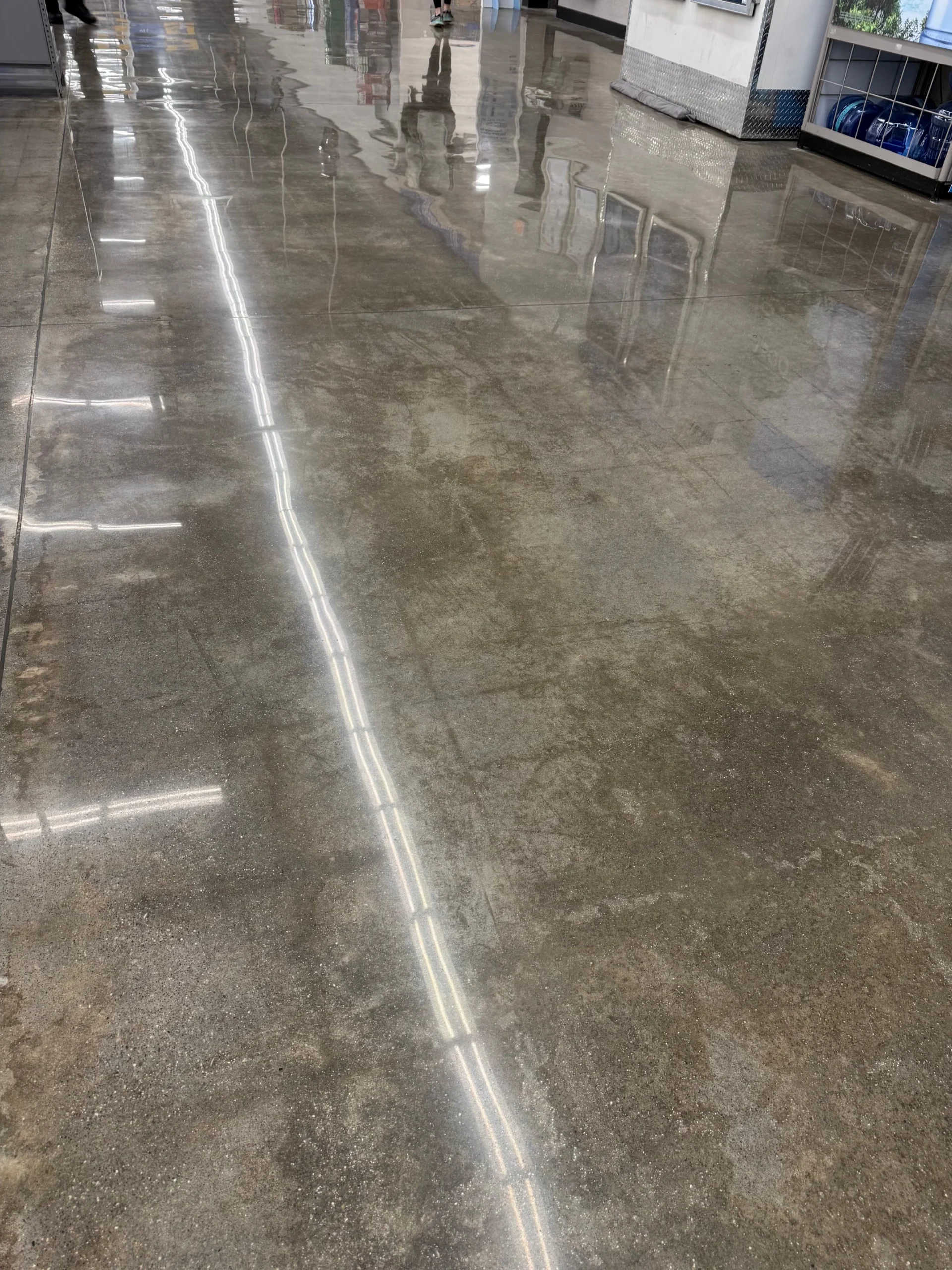
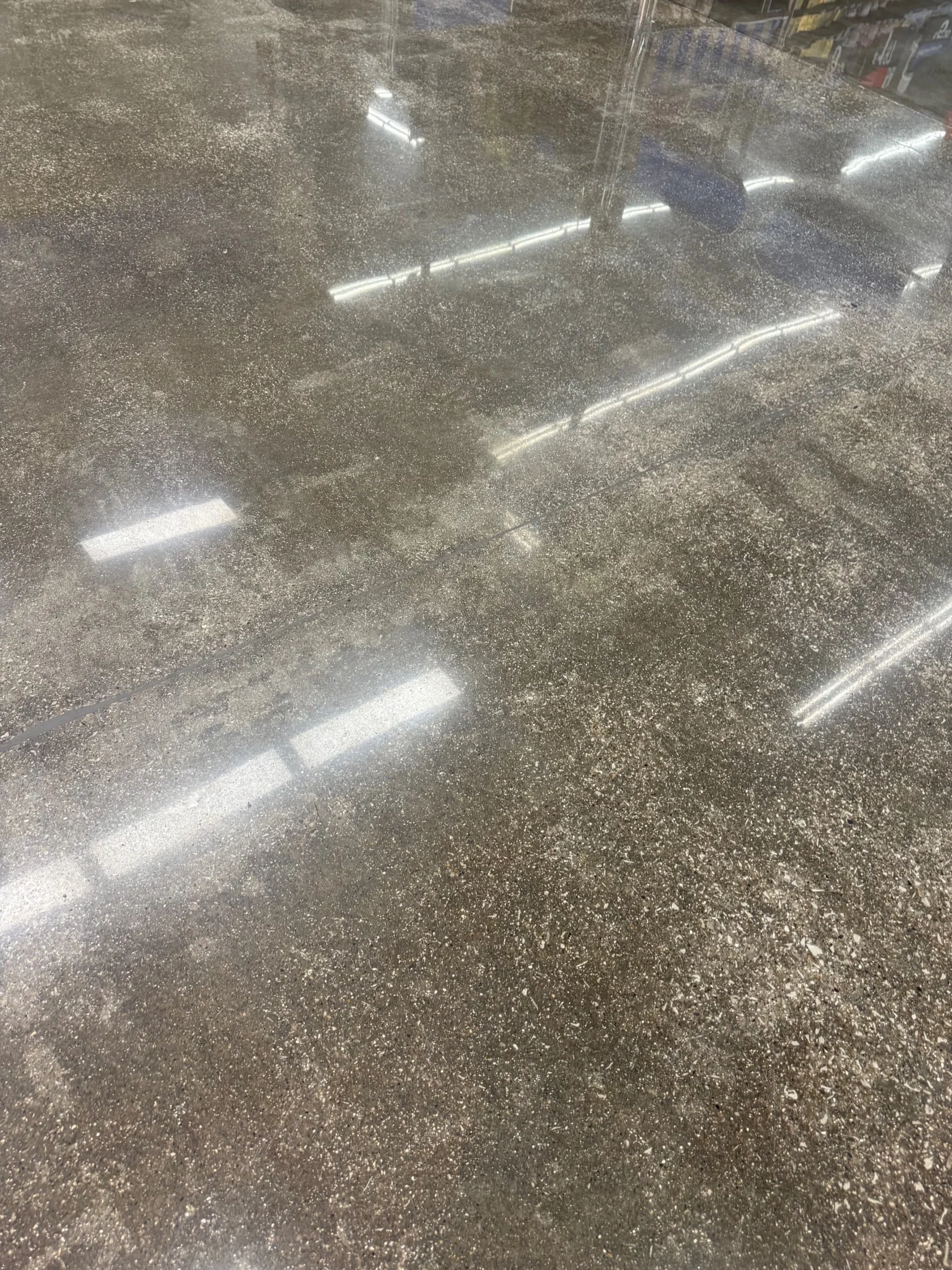
These photos are from our polished concrete restoration at a Beckley grocery store. See the full Beckley grocery store project. Explore natural aggregate, tonal variation, joints, and reflected light in these polished concrete examples. Each slab is different. Select a photo for a larger view.
A CLEAR WAY FORWARD
Know what’s included, how the work fits your space, and what happens next.
Review previous treatments, contaminants, cracks, repairs, and access.
Set expectations for exposure, sheen, edges, and the appearance of repairs.
Define removal, grinding, polishing, dust control, and treatment products.
Coordinate other trades and agree on cleaning and ongoing care.
PLAN WITH CONFIDENCE
Take a closer look at the preparation, finish, and care considerations for your project.
What shapes the estimate?Existing concrete has its own aggregate, color variation, patches, and history. Grinding can expose differences that were not visible at the surface. A representative sample area helps establish expectations before a large floor is finished.
Mechanical polishing refines the concrete surface through a planned grinding and polishing sequence. A coating creates a separate layer over prepared concrete. Grind-and-seal is another finish and should be named accurately in a proposal.
Discuss aggregate exposure, sheen, visible repairs, edge work, and any treatment products. Do not choose from a photograph alone; another slab may produce a different result.
Adhesive or coating removal, cracks, joints, flatness, and contaminated areas can change the achievable finish and cost. Polishing does not make concrete immune to staining or damage. Spill response and regular maintenance still matter.
Confirm access, dust control, protection of nearby areas, and the work sequence. Protect the finished floor from other trades. The final care plan depends on the actual polishing process and treatments specified.
If you need a uniform opaque color, a defined chemical barrier, or a particular textured finish, a resinous coating may be a better direction to investigate. We can discuss both approaches before you settle on a finish.
COMMON QUESTIONS
No. Slab condition, previous treatments, repairs, and your appearance expectations can limit suitability. Start with an assessment and, where appropriate, a sample.
Repairs and variations may remain visible. Agree on acceptable appearance and sample results before proceeding.
TELL US WHAT YOU HAVE IN MIND
Start with your town, the space, and what you want to change.